Why Some Sweatshirts Feel Better and Last Longer: Understanding GSM, Fleece and French Terry
What makes a good sweatshirt? Understand GSM, French terry, brushed fleece, warmth, softness and durability before choosing your next garment.
· 15 min read
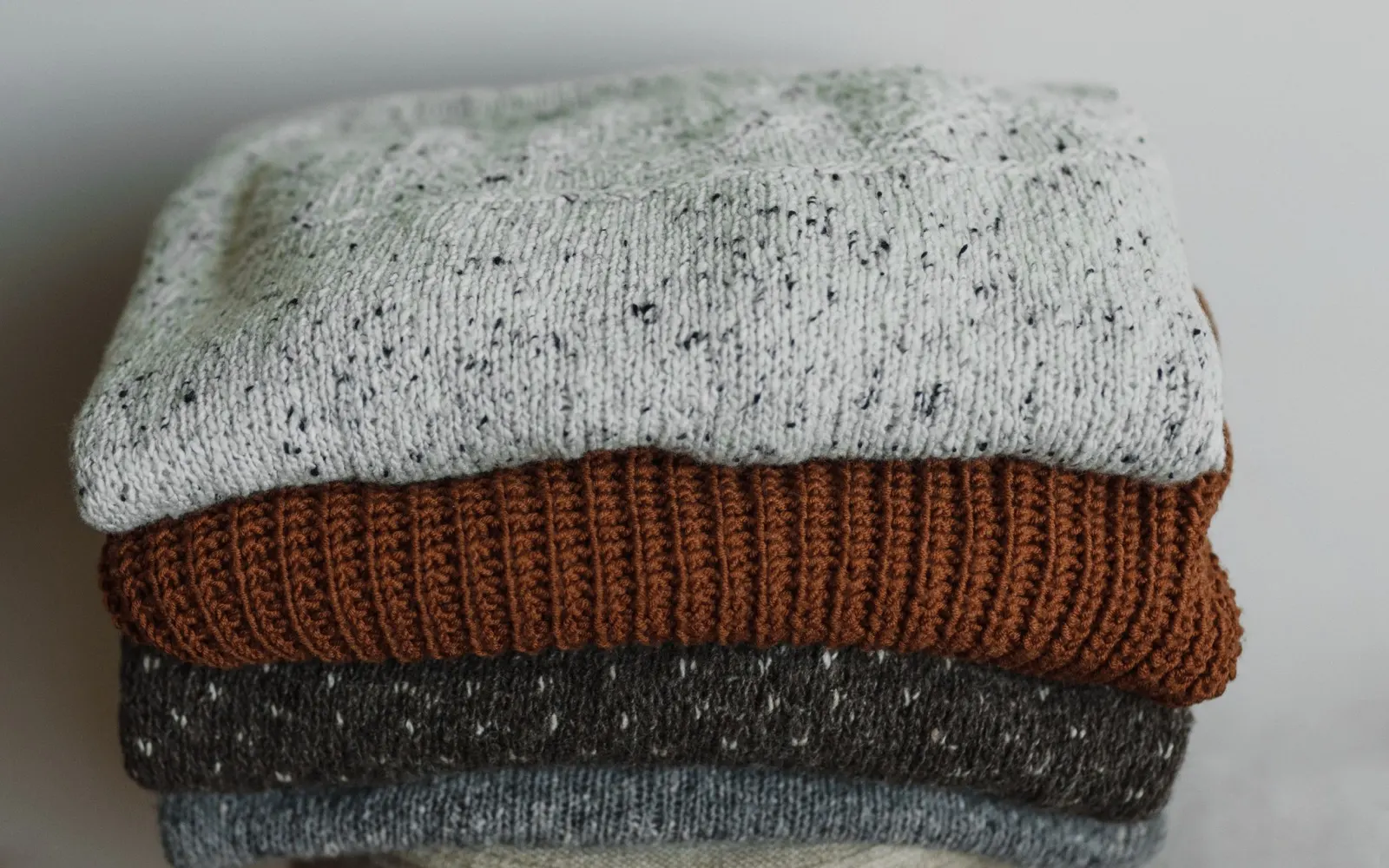
You've probably owned a sweatshirt that became an instant favourite.
The one you reached for on cooler mornings. The one that felt comfortable without being bulky. The one that somehow worked with jeans, joggers and almost everything else in your wardrobe.
Then there was the other sweatshirt.
It looked promising when you bought it, but after a few washes the cuffs felt loose, the surface began to pill or the fit wasn't quite the same.
Both were sweatshirts.
So why did they behave so differently?
Part of the answer lies in what you don't immediately see: fabric construction, weight, finishing and the details that hold the garment together.
Terms such as GSM, French terry and brushed fleece can tell you something about a sweatshirt.
But only if you understand what they actually mean.
A Sweatshirt Is More Than a Thick T-Shirt
At first glance, the difference between a sweatshirt and a T-shirt might seem obvious.
One is usually heavier and warmer.
But sweatshirts are designed around a variety of fabric constructions and finishing processes.
Some have a smooth outer surface and small loops on the inside.
Others have a soft, brushed interior that feels almost fluffy.
Some are lightweight enough for mild weather. Others are intended for colder conditions.
A sweatshirt may also be designed with a relaxed silhouette, substantial ribbed cuffs, a structured collar or a hood.
Each of these decisions affects how it feels during wear.
That's why two sweatshirts with similar colours and designs can offer very different experiences.
What Does GSM Mean in Sweatshirt Fabric?
GSM stands for grams per square metre.
It measures the weight of a fabric over a standard area.
If a fabric is described as 300 GSM, one square metre of that fabric weighs approximately 300 grams.
It's a useful specification because it helps describe how substantial the material is.
But here's the common misunderstanding.
Higher GSM does not automatically mean higher quality.
A heavier fabric may feel more substantial, but its softness, resilience, warmth and durability also depend on fibre composition, yarn, construction and finishing.
A well-made lighter sweatshirt can be more suitable for certain conditions than a poorly constructed heavier one.
How different fabric weights are used
There's no universal GSM classification that applies to every brand, but these broad ranges can help explain how sweatshirt fabrics are commonly considered:
| Fabric weight | General positioning |
|---|---|
| Around 200–250 GSM | Relatively lightweight sweatshirt or layering fabric |
| Around 250–320 GSM | Versatile midweight sweatshirt fabric |
| Around 320–400 GSM | More substantial heavyweight sweatshirt fabric |
| Above 400 GSM | Very heavy styles, depending on constructionThese are illustrative ranges, not formal industry standards. |
The same GSM can feel different depending on the fabric composition and structure.
Before choosing a weight, think about climate, layering, intended use and the preferred silhouette.
French Terry: Comfortable Without Excessive Bulk
French terry is often used in sweatshirts, joggers and casual clothing.
Its defining characteristic is the fabric structure.
The outer surface is generally relatively smooth, while the reverse side has visible or subtle loops.
These loops create a different wearing experience from a heavily brushed interior.
French terry is often selected for garments that need a balance between casual comfort and moderate warmth.
Depending on its weight and construction, it can work well for relaxed indoor wear, mild weather and layering.
One reason people appreciate French terry is that it can feel comfortable without the plush interior associated with brushed fleece.
However, French terry isn't automatically lightweight.
It can be produced in different weights, fibre compositions and finishes.
A heavy French terry sweatshirt may feel quite substantial, while a lighter version may be appropriate for transitional weather.
When might French terry be a good choice?
Consider it when you want a sweatshirt that feels versatile.
Perhaps you're moving between indoor and outdoor environments.
Maybe you prefer layering rather than wearing one particularly warm garment.
Or perhaps you simply don't like a fluffy interior against your skin.
Those preferences matter.
The right fabric isn't necessarily the warmest one available.
It's the one that suits your needs.
Brushed Fleece: Why the Inside Feels So Soft
Turn a brushed-fleece sweatshirt inside out and you'll notice a very different surface.
Instead of visible loop structures, the interior has been mechanically brushed to create a raised, soft texture.
That raised surface changes both appearance and feel.
It can help trap air within the fabric structure and contribute to a warmer wearing experience.
It's one reason brushed fleece is commonly associated with comfortable cold-weather garments.
But the degree of warmth still depends on factors such as fabric weight, composition, structure, fit and the surrounding conditions.
Not every brushed-fleece sweatshirt will provide the same insulation.
Does fleece always mean polyester?
No.
The word fleece can describe a type of fabric or finishing rather than one specific fibre composition.
Some brushed sweatshirt fabrics are cotton-rich blends.
Others contain different proportions of synthetic fibres.
It's important to check the actual composition rather than assume every fleece garment is made from the same material.
French Terry vs Brushed Fleece: Which Is Better?
The answer depends on what you're looking for.
If your priority is a versatile sweatshirt for moderate conditions, French terry may appeal to you.
If you want a plush interior and greater warmth for cooler weather, brushed fleece may be preferable.
Here is a simple comparison.
| Feature | French terry | Brushed fleece |
|---|---|---|
| Inner surface | Usually looped | Raised, brushed texture |
| Feel | Often less plush | Often soft and fluffy |
| Warmth | Depends on weight and construction | Often selected for added warmth |
| Layering | Frequently versatile | Useful in cooler conditions |
| Best choice | Mild weather and everyday layering | Cooler weather and cosy casualwearNeither fabric is universally superior. |
The right choice depends on climate, comfort preference, activity and product design.
Why Sweatshirt Cuffs and Necklines Matter
Fabric receives most of the attention when people discuss sweatshirt quality.
But construction details deserve just as much.
Consider the cuffs.
A good cuff should sit comfortably around the wrist without feeling excessively tight or becoming loose immediately.
Ribbed fabrics are commonly used because their structure provides stretch.
Some rib fabrics also include elastane or spandex to improve stretch and recovery.
However, the results depend on the actual material, construction and finishing.
A ribbed cuff is not automatically durable merely because it contains a stretch fibre.
The same applies to waistbands and necklines.
Look for tidy stitching, consistent shape and comfortable tension.
A sweatshirt can have excellent body fabric yet still disappoint if the collar, cuffs or hem are poorly made.
What Makes a Sweatshirt Pill?
Pilling occurs when fibres on the fabric surface become entangled into small balls.
You may notice it around areas that experience friction, such as under the arms or along the sides of a garment.
Pilling can result from a combination of fibre characteristics, yarn structure, fabric construction, finishing and wear.
It isn't limited to cheap clothing.
Even a relatively expensive sweatshirt may pill under certain conditions.
However, the extent of pilling and the way a fabric changes over time can be important quality considerations.
If you're developing sweatshirts for a brand, it may be worth requesting appropriate pilling-resistance evaluation during sampling.
For personal clothing, gentle laundering and following care instructions can help reduce avoidable wear.
Why Do Some Sweatshirts Shrink After Washing?
A sweatshirt's fit can change when the fabric relaxes during washing and drying.
This is particularly relevant to certain knitted fabrics.
Heat, agitation and the way a garment was processed before sale can influence dimensional changes.
Cotton-rich fabrics may be more susceptible to some shrinkage effects than certain polyester-rich alternatives, although actual performance varies.
A manufacturer can use appropriate finishing processes and testing to help control dimensional stability.
But buyers should not assume that a sweatshirt will never shrink simply because it is described as pre-shrunk.
The sensible approach is to check the stated care instructions and evaluate the garment after laundering.
If you're ordering sweatshirts in bulk, sample wash testing before production approval can be especially useful.
What Does Fabric Composition Tell You?
You may see sweatshirts labelled 100% cotton, 70/30 cotton-polyester, 80/20 cotton-polyester or other combinations.
These figures describe the fibre percentages.
They can help you understand the intended balance between cotton and synthetic fibres.
But they don't tell you everything.
An 80% cotton sweatshirt isn't necessarily better than a 70% cotton version.
The final result also depends on yarn quality, fabric weight, knitting, finishing and sewing.
MP Apparels & Garments currently presents cotton and cotton-polyester garments in different weights. French terry and brushed fleece are broader options buyers may discuss with a manufacturer, but availability and exact specifications should be confirmed directly.
Those are useful starting points for discussing product requirements.
The appropriate specification should ultimately be chosen according to the garment's intended purpose.
How to Choose a Sweatshirt for Different Weather
Climate should influence your clothing choices.
A very heavy sweatshirt may be uncomfortable during mild weather, particularly when you're moving between warm outdoor conditions and air-conditioned spaces.
For cooler evenings, a midweight layer may be sufficient.
For colder conditions, a heavier or brushed garment may be more appealing.
But don't use GSM alone to predict warmth.
Fit, layering, wind, moisture and fabric construction all influence how comfortable you feel.
For mild weather
Consider a relatively lightweight sweatshirt or French terry layer that can be removed easily.
For cooler days
A comfortable midweight sweatshirt may provide a useful balance of warmth and mobility.
For colder conditions
A suitably constructed brushed-fleece or heavier sweatshirt may help, especially when combined with appropriate outer layers.
The aim is comfort suited to the actual environment, not simply choosing the heaviest available option.
How to Check Sweatshirt Quality Before Buying
You don't need to be a textile specialist to notice basic signs of construction quality.
Start with the fabric.
Does it feel consistent across the garment?
Are there unexpected thin patches or visible defects?
Look at the stitching.
Are the seams tidy? Are loose threads excessive? Does the neckline sit evenly?
Check the ribbing.
Does it stretch comfortably? Does it appear to recover after being gently extended?
Look at the overall shape.
Are the sleeves balanced? Does the garment hang as intended? Is the hem reasonably even?
If you're purchasing online, examine the fabric information, size guide, construction details and care label.
For a bulk order, a physical sample and relevant quality tests provide a much stronger basis for approval than photographs alone.
Designing Sweatshirts for Your Own Clothing Brand
If you're creating a sweatshirt collection, choosing the right fabric involves several connected decisions.
Start with your audience.
Are you designing for mild weather or cold conditions?
Will customers wear the garment indoors, outdoors or as part of layered outfits?
Do you want a relaxed silhouette or a more structured look?
Then consider the fabric weight, fibre composition and preferred inner surface.
French terry and brushed fleece can create quite different experiences even when the garments share a similar design.
You should also examine ribbing, seams, hood construction where relevant, sizing and washing performance.
For commercial production, these details should be reflected in a clear specification and approved samples.
At MP Apparels & Garments, sweatshirts, hoodies and related casualwear form part of the company's stated manufacturing focus.
For clothing businesses exploring these categories, defining fabric and construction requirements clearly is an important first step towards a more consistent finished product.
A Better Sweatshirt Is One That Fits Its Purpose
It's tempting to judge sweatshirt quality by one number.
Higher GSM must mean better.
More cotton must mean softer.
Thicker fabric must mean warmer.
But clothing doesn't work quite so neatly.
Fabric construction, fibre composition, finishing, fit and care all contribute to the final experience.
A lightweight French terry sweatshirt can be an excellent choice for one person.
A substantial brushed-fleece hoodie may suit someone else perfectly.
Neither decision is wrong.
The real measure of a good sweatshirt is how well it performs the job it was designed to do — and how comfortably you can keep wearing it.
Frequently Asked Questions
What is GSM in a sweatshirt?
GSM means grams per square metre. It describes fabric weight, not overall garment quality.
Is 300 GSM good for a sweatshirt?
A 300 GSM fabric may be appropriate for a midweight sweatshirt, but its suitability depends on composition, construction, climate and intended use.
Is French terry better than fleece?
Neither is universally better. French terry is often suitable for versatile everyday layering, while brushed fleece is commonly selected for a softer interior and additional warmth.
Does a heavier sweatshirt last longer?
Not necessarily. Durability also depends on yarn quality, stitching, fabric construction, finishing and care.
Why do sweatshirts become loose around the cuffs?
Cuff performance depends on rib construction, fibre composition, stretch recovery, wear and laundering conditions.
What sweatshirt fabric should clothing brands choose?
Begin with the intended customer, climate, preferred fit, garment use and required performance. Evaluate appropriate samples before approving bulk production.