How to Check a T-Shirt Sample Before Bulk Production
Learn how to check T-shirt samples before bulk production, including fabric weight, fit, shrinkage, stitching and wash testing.
· 14 min read
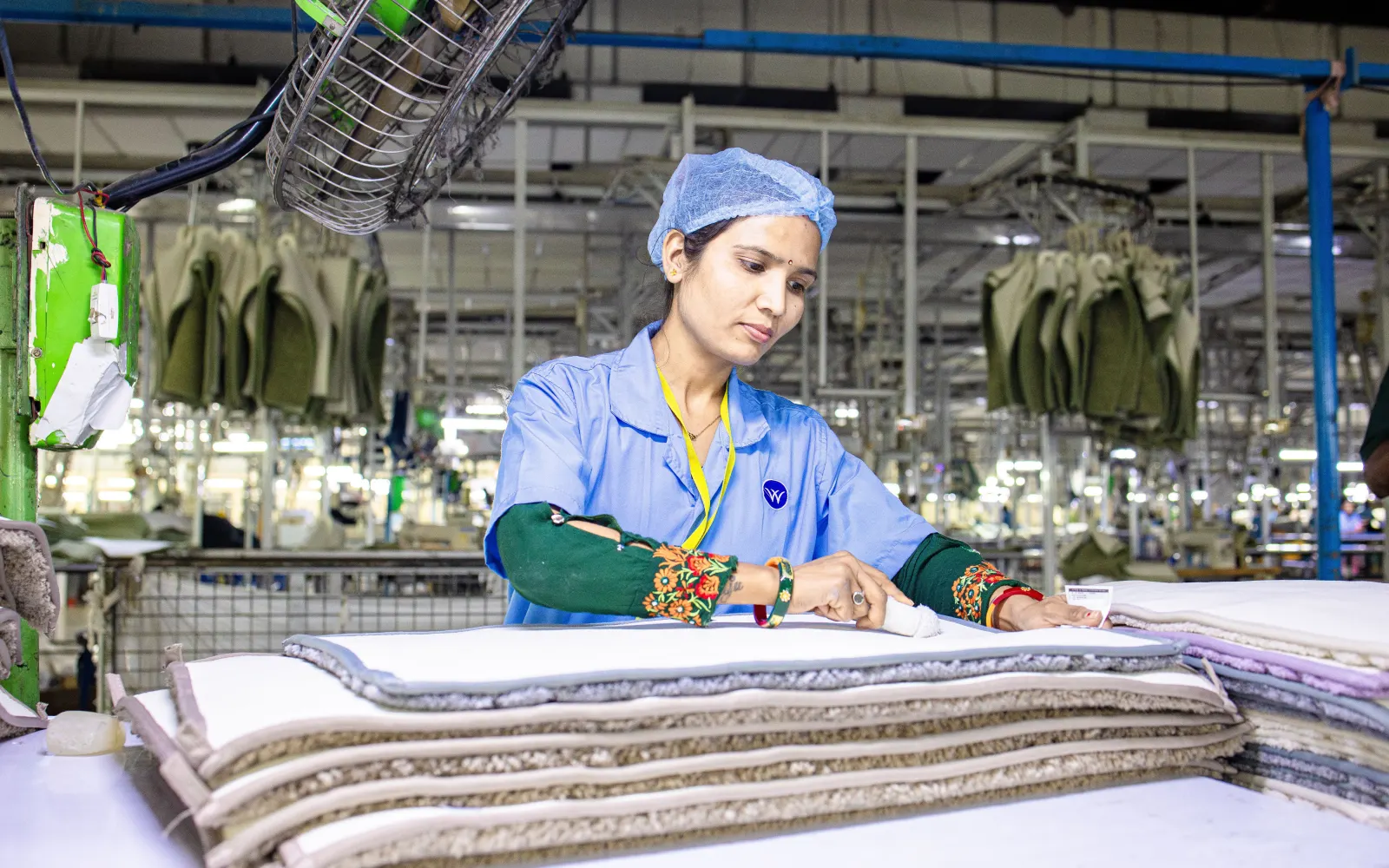
Fabric, fit, shrinkage and garment quality: what clothing brands should examine before approving a production run
A T-shirt can look excellent when it first comes out of its packaging. The colour is right, the fabric feels soft, and the fit appears exactly as you imagined.
But what happens after the first wash?
Does the length change? Does the neckline lose its shape? Do the side seams begin to twist? Does the fabric still feel as comfortable as it did when you first handled it?
These questions matter when you're buying one T-shirt. They matter even more when you're preparing to manufacture hundreds or thousands of them.
A production sample is more than a preview of how your garment will look. It's an opportunity to find problems while they can still be corrected.
Here's how clothing brands can assess a T-shirt sample before approving bulk production, without relying on appearance alone.
Why sample approval matters
When developing a clothing collection, it's tempting to focus on colour, branding and the overall silhouette.
Those details are important, but they don't tell the whole story.
A T-shirt must also behave consistently when worn, washed and handled. Fabric weight, garment measurements, stitching, finishing and dimensional stability can all influence the result.
A small difference in a sample might become a much larger concern when repeated across an entire production order.
For example, an uneven neckline may be barely noticeable when examining one shirt. If that same construction issue appears across a large batch, it can affect customer satisfaction, returns and the reputation of the brand.
Sample approval allows buyers and manufacturers to agree on the intended result before production proceeds.
It also provides a physical reference against which finished garments can be assessed.
1. Start with the intended use, not the fabric label
Before examining a sample, ask a simple question:
Who is this T-shirt being made for, and how will they wear it?
A relaxed cotton T-shirt for casual everyday use has different requirements from a fitted training top or a promotional garment intended for frequent washing.
Consider three examples.
An oversized everyday T-shirt may need sufficient fabric body to maintain its relaxed shape without feeling unnecessarily heavy.
A lightweight summer T-shirt should balance comfort, coverage and airflow.
A training T-shirt may need particular attention to moisture management, drying behaviour and freedom of movement.
These differences influence which fabric, construction and fit are appropriate.
There is no single specification that automatically makes every T-shirt better.
The right specification is the one that supports the garment's intended purpose.
2. Check the fabric weight and construction
Fabric weight is commonly expressed in GSM, meaning grams per square metre.
It tells you how much a standard area of fabric weighs.
However, GSM is not a quality score.
Two T-shirts made from fabric with the same GSM can feel and perform differently because of their fibre composition, yarn, knitting structure and finishing.
A densely constructed fabric may feel more substantial than another fabric of similar weight with a more open structure.
Likewise, a lightweight fabric may feel comfortable in warm conditions but require closer inspection for transparency, stability or durability.
What to examine
When handling a sample, consider:
- Whether the fabric feels appropriate for the intended garment.
- Whether it is excessively transparent when held against light or stretched.
- Whether the surface feels consistent across the garment.
- Whether the fabric stretches and recovers appropriately.
- Whether the material drapes naturally rather than appearing unusually stiff or distorted.
If your production brief specifies a particular GSM, ask the manufacturer how that weight has been verified.
Remember that a finished T-shirt's total weight is not the same measurement as the GSM of its fabric.
For a broader understanding of the materials themselves, our guide to cotton, polyester and blended T-shirt fabrics explains how fibre composition and garment construction influence everyday comfort.
3. Check the measurements against the approved size chart
A garment may look well-proportioned on a hanger yet differ noticeably from its intended measurements.
This is why sample approval should include actual measurements rather than visual assessment alone.
Lay the T-shirt flat on a suitable surface and compare the relevant dimensions with the approved specification.
Common measurement points include chest width, body length, shoulder width, sleeve length, sleeve opening and neckline dimensions.
The exact measurement method matters.
For example, measuring body length from the highest shoulder point may produce a different result from measuring from the back neckline.
The buyer and manufacturer should agree on the method and allowable tolerances before production.
Check the garment while it is being worn
Measurements are essential, but they cannot describe every aspect of fit.
A shirt might match its technical dimensions and still feel uncomfortable because the armhole is restrictive, the neckline sits awkwardly or the shoulder position does not suit the intended silhouette.
Where practical, try the garment on someone whose measurements correspond to the intended size.
Observe how it behaves when the wearer raises their arms, bends and moves naturally.
For relaxed or oversized styles, pay particular attention to how the fabric hangs from the shoulders and whether the extra room appears intentional.
4. Inspect the neckline, sleeves and stitching
Construction details often become more noticeable after repeated wear.
The neckline is an especially useful place to begin.
Look at how the ribbed collar is attached to the body, whether the stitching is even and whether the neckline lies naturally.
An excessively stretched collar can appear wavy. Poorly balanced construction may cause the neckline to sit unevenly.
Next, examine the shoulder seams, sleeve attachments, side seams and bottom hem.
Look for consistent stitching, secure seam ends and fabric that lies smoothly without unnecessary puckering.
Check that the left and right sides appear balanced.
A neat seam does not prove that a garment will last indefinitely, but visible inconsistencies are worth investigating before approving production.
Why seam quality matters
Everyday movement and laundering place repeated stress on garment seams.
The appropriate stitch type and seam construction depend on the fabric, garment design and intended use.
For example, a knit T-shirt generally requires stitching that accommodates the fabric's stretch.
The objective is not simply to make stitching look tidy. It is to ensure the seam is suitable for the garment and remains secure during normal use.
5. Wash the sample before approving it
This is one of the most useful checks a clothing brand can perform.
A T-shirt may change after laundering as the fabric relaxes, fibres respond to moisture and heat, or tensions introduced during production are released.
These changes are not always immediately visible when a sample is new.
A practical wash-test procedure
Begin by recording the T-shirt's original measurements.
Photograph it while laid flat, paying attention to the collar, side seams and overall shape.
Then wash and dry the garment according to the proposed care instructions.
Once fully dry, measure it again using the same method.
Compare the results with the original measurements and your agreed tolerances.
You should also inspect how the fabric feels, whether the neckline remains balanced and whether the garment still hangs correctly.
If appropriate, repeat the laundering process to observe whether further changes occur.
This is a useful preliminary check, although it does not replace formal laboratory testing where controlled results are required.
How to calculate shrinkage
Suppose a sample measures 70 cm in length before washing and 68.6 cm afterwards.
The percentage reduction is:
Shrinkage (%) = [(Original measurement − Final measurement) ÷ Original measurement] × 100
In this example, the T-shirt has shortened by 2%.
Whether that result is acceptable depends on the agreed specification, intended use and applicable quality requirements.
There is no universal acceptable shrinkage percentage for every garment.
6. Watch for twisting and loss of shape
A garment can maintain much of its overall size yet become visibly distorted.
One example is side-seam twisting, sometimes called spirality.
After washing, the side seam may shift towards the front or back of the garment rather than remaining in its intended position.
This can be influenced by yarn characteristics, knitted fabric structure, processing and garment construction.
Check the side seams after laundering rather than relying only on the garment's original appearance.
Also inspect the collar, sleeves and bottom hem for curling, distortion or unevenness.
If the sample changes significantly, discuss the findings with the manufacturer before approving it.
7. Examine colour and surface appearance
Fabric colour can look different under different lighting conditions.
A sample examined beneath warm indoor lighting may appear different in daylight.
Where appropriate, compare the garment against the approved colour standard under controlled or consistent lighting.
Inspect the surface for visible colour variation, inconsistent finishing or marks.
After washing, check whether the colour has changed noticeably.
Look for pilling, excessive fuzziness or changes in fabric texture.
For printed or decorated garments, inspect the print after washing as well.
A simple home wash can identify visible concerns, but it cannot replace recognised colourfastness or durability testing.
If precise performance is essential, agree on appropriate laboratory tests with the manufacturer.
8. Performance T-shirts need additional checks
A training T-shirt presents particular challenges.
The garment may need to remain comfortable during sustained movement, perspiration and repeated laundering.
However, a fabric described as polyester or moisture-wicking is not automatically suitable for every type of exercise.
Its performance depends on the complete construction, including fibre characteristics, yarn, knit structure, finishing and fit.
If a brand intends to make specific moisture-management claims, it should obtain appropriate evidence rather than assume the claims are supported by the fibre label.
Formal textile testing can assess characteristics such as liquid moisture management, air permeability and drying behaviour.
For a reader-focused explanation of what these properties actually mean, Performance Heritage's guide to breathable, moisture-wicking and quick-dry activewear explains why workout clothing can still feel wet or uncomfortable despite its performance label.
The manufacturing question is slightly different: Can the chosen fabric and finished garment consistently deliver the performance the brand intends to advertise?
That is what the sampling and testing process should establish.
9. Make sure the sample represents bulk production
Not every initial sample is made from the exact materials that will be used during production.
Sometimes an early development sample is created from available fabric to establish fit or construction.
This can be useful, but the distinction should be clear.
Before approving bulk production, confirm whether the sample represents the intended production fabric, trims, colour, stitching and finishing.
If important materials differ, ask what still needs approval.
Where appropriate, request a pre-production sample made to the agreed specifications.
The more closely that sample represents the intended production garment, the more useful it becomes as an approval reference.
Record what has actually been approved
A simple approval record should identify the style, size, fabric specification, colour, construction details, measurements, agreed tolerances and any approved changes.
It should also identify the sample version being approved.
This reduces the chance of confusion when production begins.
Verbal approval alone may leave too much room for misunderstanding.
10. Consider the customer's climate and routine
A T-shirt that feels suitable in one environment may be less appropriate in another.
For brands serving customers in Pakistan, this can be particularly important.
Karachi's humid conditions, warmer afternoons in many cities and cooler winter mornings can place different demands on everyday clothing.
A brand may therefore need to consider more than its intended visual identity.
Fabric weight, airflow, sleeve design and layering compatibility should support how customers are likely to use the garment.
For an everyday perspective, MPGEAR's guide to dressing for changing weather in Pakistan explores how clothing choices can adapt as temperatures shift throughout the day.
The manufacturing lesson is straightforward: develop the garment for the conditions and routines of the intended customer, not merely for how it looks in a product photograph.
A practical T-shirt sample approval checklist
Before authorising bulk production, confirm the following:
| Area | What to check |
|---|---|
| Fabric | Correct composition, weight, texture and construction |
| Measurements | Match the approved size chart within agreed tolerances |
| Fit | Suitable shape and freedom of movement |
| Neckline | Balanced collar, even attachment and appropriate recovery |
| Stitching | Consistent seams, secure finishes and suitable construction |
| Washing | Acceptable changes in dimensions and appearance |
| Shape | No unacceptable twisting, curling or distortion |
| Colour | Matches the approved standard and performs as required |
| Decoration | Prints or other details remain suitable after care |
| Production readiness | Approved sample represents intended bulk specifications |
If a sample fails an important check, correct the issue and reassess the revised version before authorising production.
Frequently asked questions
How many samples should a clothing brand approve before bulk production?
There is no universal number. It depends on the complexity of the garment and the development process. A brand may need separate fit, colour or pre-production approvals, especially when specifications change.
Is a higher-GSM T-shirt always better quality?
No. GSM measures fabric weight. Quality also depends on fibres, yarn, knitting, finishing, stitching and suitability for the intended purpose.
Should I wash a T-shirt sample before approving it?
Yes, particularly when fit and appearance after laundering matter. Follow the proposed care instructions, record measurements before and after washing, and assess whether the changes meet the agreed specification.
Why do T-shirt side seams twist after washing?
Twisting can be influenced by yarn properties, knit construction and processing. A wash test can reveal visible spirality that may not be apparent in a new sample.
Can a sample look perfect but still fail quality checks?
Yes. A good appearance does not prove dimensional stability, colourfastness, seam durability or moisture-management performance.
What is the difference between a development sample and a pre-production sample?
A development sample helps establish the design, fit or construction. A pre-production sample is intended to represent the approved production specifications more closely. The terminology and process may vary between manufacturers.
Do I need laboratory tests for every T-shirt?
Not necessarily. Testing requirements depend on the garment's intended use, customer requirements, contractual specifications and the performance claims being made. Basic sample inspection is valuable, but some claims require controlled testing.
Better sampling leads to better production decisions
A well-made T-shirt begins long before the finished garment reaches a customer.
It begins with clear specifications, considered fabric choices and careful assessment of how the sample behaves.
The goal of sampling is not to find a garment that looks perfect for a few minutes. It is to establish whether that garment can be produced consistently and perform as intended.
For clothing brands, taking the time to inspect, measure, wash and review a sample can prevent avoidable misunderstandings later.
At MP Apparels & Garments, we believe informed decisions about fabric and construction are essential to developing clothing that meets its intended purpose. Understanding what to examine before approving production helps make those decisions more confidently.