Bulk Personalised Hoodies and Sweatshirts: A Manufacturing Guide for Clothing Brands
Planning a personalised clothing range? Explore bulk hoodie and sweatshirt manufacturing, custom designs, sampling, MOQ and production requirements.
· 12 min read
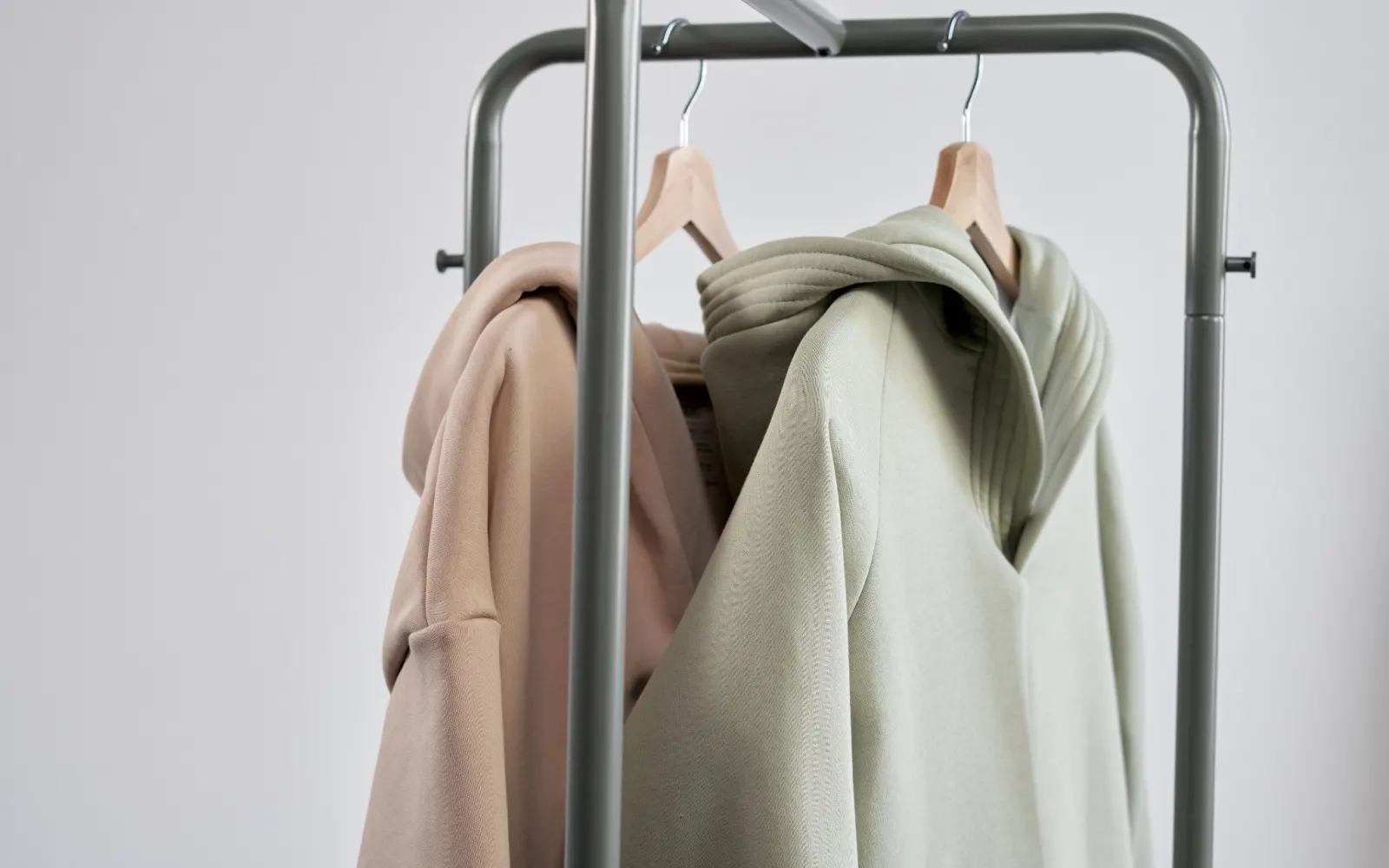
A sweatshirt with Mama Est. 2026 embroidered across the chest can look deceptively simple. Add a child's name to the sleeve, choose a soft neutral colour, photograph it nicely, and you have something that feels personal enough to give as a gift.
But there's quite a difference between making one sweatshirt and preparing a collection for a retailer.
Imagine a brand launching matching family hoodies. The adult designs look beautiful in the mock-ups, yet the lettering becomes crowded on the smaller sizes. One customer's surname is six letters long; another's is fourteen. The embroidery looks balanced on cream fabric, but the same thread colour barely stands out against grey.
None of this means the idea is poor. It means the design needs to be developed as a product, not simply as a picture.
For clothing brands exploring bulk personalised hoodies, custom sweatshirts and private-label apparel, getting those details right before production makes the whole process more manageable.
At MP Apparels & Garments, the starting point is an approved garment specification and sample. The artwork matters, certainly, but so do the fabric, fit, decoration placement and construction behind it.
Why personalised clothing deserves a more thoughtful approach
People don't necessarily buy a Mama sweatshirt because they need another sweatshirt.
They may like the year embroidered beneath the lettering, the names of their children along one sleeve, or the idea of wearing something that marks a particular stage of life.
The same goes for Mrs. hoodies, anniversary sweatshirts and coordinated family clothing.
For a clothing business, that emotional appeal creates interesting possibilities. A retailer could build a Mother's Day collection around understated embroidery or develop matching family pieces with a shared typographic style.
The temptation, of course, is to offer everything: ten colours, twenty slogans, different placements, custom names, different garments and several embroidery styles.
It sounds exciting until someone has to organise the production.
A more focused collection is often easier to develop consistently. Three well-considered designs with a recognisable identity can be a more sensible starting point than dozens of unrelated variations.
Mum, wife and family clothing: three different design directions
A Mama sweatshirt might suit a subtle left-chest design, perhaps with a year underneath. A Wifey hoodie could take a more playful approach, while matching family garments may need related artwork across adult and children's sizes.
They don't all have to look alike.
What matters is that each idea suits its intended customer and remains practical to reproduce.
A brand developing personalised mum sweatshirts might explore restrained lettering, earthy colours and sleeve details. A collection aimed at newlyweds could use initials, surnames or wedding dates. Family apparel introduces another consideration: creating coordinated garments without making every design identical.
These are creative examples, not ready-made MP Apparels stock designs. Buyers remain responsible for selecting and approving their final artwork.
Choosing the garment before choosing the decoration
Sometimes buyers begin with a logo or phrase and work backwards towards the clothing.
That can be perfectly reasonable during early design exploration, but the actual garment shouldn't be an afterthought.
A T-shirt, sweatshirt and hoodie offer different surfaces for artwork.
T-shirts are useful when the design relies on a clean front graphic or uncomplicated typography. A larger print may suit the garment, but its dimensions still need checking across sizes.
Crewneck sweatshirts give brands a different silhouette and an opportunity to explore subtle chest lettering, smaller graphics or selected embroidery placements.
Hoodies introduce extra considerations. The front pocket can affect where artwork sits. The hood and drawcord area influence the space available near the neckline, while sleeve decoration must account for garment proportions and seams.
A beautifully arranged digital mock-up isn't enough to settle these decisions.
Look at a physical sample. The way the design sits on an actual garment matters more than how impressive it looks on a screen.
For readers considering everyday garment quality from the wearer's perspective, MPGEAR's guide to recognising a good-quality T-shirt offers a useful comparison of fabric, fit and construction. Those same concerns become even more important when a brand is responsible for an entire production order.
Printing or embroidery? Let the artwork decide
There is a tendency to describe embroidery as the premium option and printing as the economical one.
It's a little more complicated than that.
A small embroidered name may look beautifully restrained on a sweatshirt. On the other hand, delicate lettering, colour transitions or a large illustration may call for a different decoration method.
The fabric and the dimensions of the artwork matter too.
Consider a sleeve with three children's names. The chosen lettering may look perfect on a screen, but it still needs to be assessed at its actual production size. Embroidery density, legibility and placement should be reviewed before the design is approved.
For printed artwork, the buyer needs to consider the intended appearance, colour consistency and compatibility with the selected garment.
MP Apparels & Garments handles printing, embroidery and labels in-house, with these elements developed according to the approved specifications.
The important thing isn't to choose whichever method sounds more impressive. It's to choose the one that suits the design and confirm the result on a sample.
The detail many personalised clothing brands overlook
A collection using fixed artwork is not necessarily the same as a collection offering individual names on every garment.
Say a retailer orders 250 sweatshirts, all featuring the same Mama Est. 2026 design. That is one defined artwork arrangement.
Now imagine those 250 sweatshirts each require a different name embroidered on the sleeve.
The second order introduces variable information that must be organised, checked and matched to the correct garment. Artwork approval, production handling and error control become more involved.
It's worth discussing this distinction early, especially if your online shop allows customers to enter individual names or dates.
Variable personalisation should never be assumed to be included in a standard bulk manufacturing quotation. Its feasibility, process and commercial terms need to be reviewed separately.
For a buyer, clarifying this before sampling can prevent a great deal of confusion later.
What the fabric needs to do
A customer may first notice the lettering, but they'll spend far more time wearing the garment than looking at its design.
That's why fabric selection deserves attention.
A sweatshirt might look substantial in photographs and feel quite different when worn. Two cotton-rich fabrics may behave differently because of their construction, finishing and weight. Higher GSM doesn't automatically mean better quality, just as a particular fibre composition doesn't guarantee softness or durability.
When developing custom sweatshirts, buyers should specify their intended fabric composition and GSM alongside the fit and construction requirements.
The appropriate material depends on the product's purpose. A lighter everyday sweatshirt and a heavier cold-weather hoodie may need different specifications.
MP Apparels develops manufacturing according to the approved fabric requirements rather than assuming a preferred composition or weight.
For a closer look at how material decisions affect garments, our sweatshirt fabric guide covering GSM, fleece and French terry explains the differences.
It's worth understanding these details before requesting quotations. Otherwise, two manufacturers may appear to be offering the same garment when the underlying specifications are quite different.
From design idea to approved sample
By this stage, a brand should know what it wants to make, for whom and roughly how the finished garment should look.
The next step is to communicate that properly.
At MP Apparels & Garments, buyers need a complete technical specification. When reproducing an existing garment, a physical reference sample is also required.
The tech pack should establish the garment measurements, construction, fabric composition, GSM, colours, sizing, decoration, labels and relevant finishing details.
It should also clarify artwork placements and dimensions.
An instruction such as small logo on the chest leaves room for interpretation. Precise placement measurements are more useful.
Once the sample is prepared, review it against the agreed requirements. Are the measurements correct? Does the decoration sit where intended? Is the stitching acceptable? Does the garment retain its intended appearance following any agreed care or wash assessments?
Our guide on checking a T-shirt sample before bulk production explains why these practical checks matter.
Samples are charged, and the agreed sample cost is included in the final order billing. Buyers should confirm the applicable commercial terms during quotation.
A sample isn't merely something to photograph for a product launch. It's the physical reference for what the manufacturer and buyer have agreed to make.
How much should a brand order?
A new retailer may be tempted to begin with every colour imaginable. A familiar design in cream, then black, then pink, then sage green. Before long, the collection has grown considerably, even though customer demand has not yet been established.
It's worth working through the quantities carefully.
MP Apparels & Garments has a minimum order of 250 pieces per colour. Sizes may be mixed within that colour quantity.
That makes the initial choice of colours important.
If you're planning a personalised sweatshirt range, consider which colours genuinely suit the collection, how many sizes you need and whether the proposed assortment is commercially sensible.
Production schedules are confirmed after the specifications have been reviewed and a production slot secured.
That matters for seasonal launches. Mother's Day and Christmas collections, for example, need sufficient time for development, sampling, approval and manufacturing.
An intended launch date is useful information to share with the manufacturer, but it isn't a confirmed production commitment.
A collection people remember
The best personalised clothing ideas often have a fairly clear point of view.
Perhaps the range uses one distinctive lettering style across different family relationships. Perhaps it focuses on quiet embroidery rather than large slogans. Or maybe the idea is a coordinated set of garments that feels playful without becoming overly decorative.
The design direction is the brand's decision.
Good manufacturing then needs to support it consistently, from the first approved sample to the final production order.
There's no need to fill every available space with a name, date, illustration or extra message. In fact, an understated design can sometimes feel more personal because the chosen details have room to stand out.
A surname, a meaningful year or a child's initials may be enough.
Planning a personalised apparel collection with MP Apparels & Garments
If you're developing custom mum sweatshirts, personalised wife hoodies, matching family clothing or private-label T-shirts, begin with the product you genuinely want to sell.
Define the design, garment type, fabric, sizing and decoration requirements before requesting bulk manufacturing.
MP Apparels & Garments supports custom garment production from yarn through to packaging, with printing, embroidery and labels managed in-house according to approved specifications.
Our minimum order is 250 pieces per colour, with sizes permitted to vary within that quantity. Sampling is charged, and production timing is confirmed once specifications and scheduling have been reviewed.
You can learn more about how MP Apparels manages custom clothing orders or send a manufacturing enquiry with your garment type, quantities, specifications and artwork requirements.
Personalised clothing may begin with something as small as a name on a sleeve. Making that design work across an entire collection requires considerably more thought.
That's where careful development makes the difference.